The books are one half of this.
The comments are the other.
I worked through the ideas in Book One publicly, a chapter at a time, over on LinkedIn. Not as marketing, but as a way of testing the argument against people who are actually living it. Outlast is next.
All twelve Book One posts are below. New posts appear on my profile first.
Your comment might end up in Book Two.
That isn't a figure of speech. Some of the strongest material in this series started as a reply from a manager who said “that's not quite how it works where I am.”
Connect or follow
Everything goes out on my LinkedIn profile first, posts, longer articles, and the occasional half-formed idea I'm still arguing with myself about.
Comment on what lands
Or on what doesn't. Tell me where the argument breaks in your organisation, what you'd add, and what you've tried that worked better. I read and reply to everything.
Watch it show up
The best examples, objections and counter-cases get worked into the books and credited where you're happy to be. Books Two and Three are still being shaped by this.
Generative cultures move bad news towards the light. If the argument in these books is wrong somewhere, I'd far rather hear it in a comment than after it's printed.
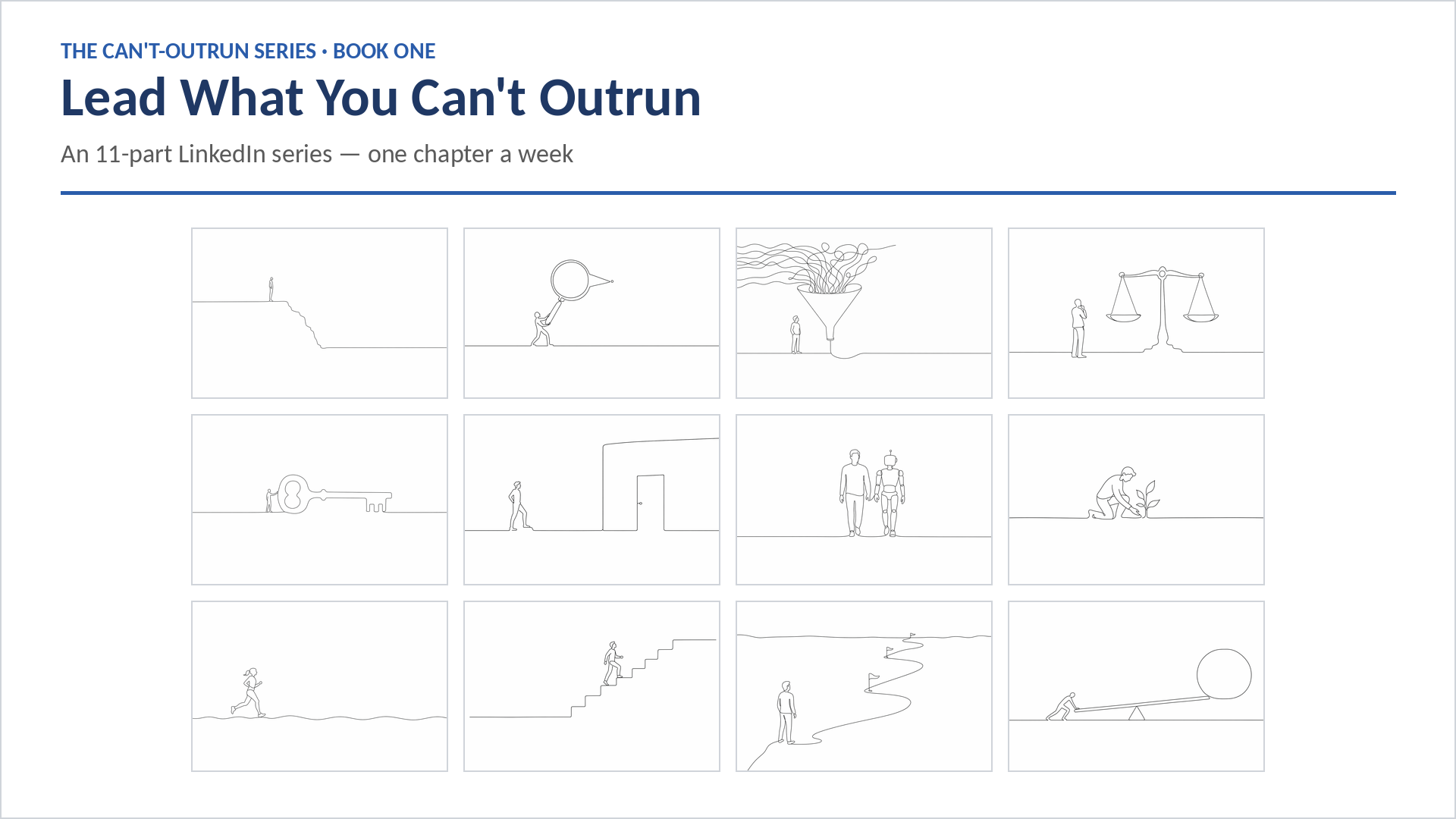
Book One, a chapter at a time.
The posts follow the shape of Lead What You Can't Outrun, and the whole series is now here to read. Each post links back to LinkedIn, where the comments live. You don't need to read them in order (but it helps if you do!) and you don't need to read them at all, because you can simply download the book.

The Series Plan
Why I'm writing this, the one idea underneath every chapter, and the shape of the twelve posts to come.
Read the post →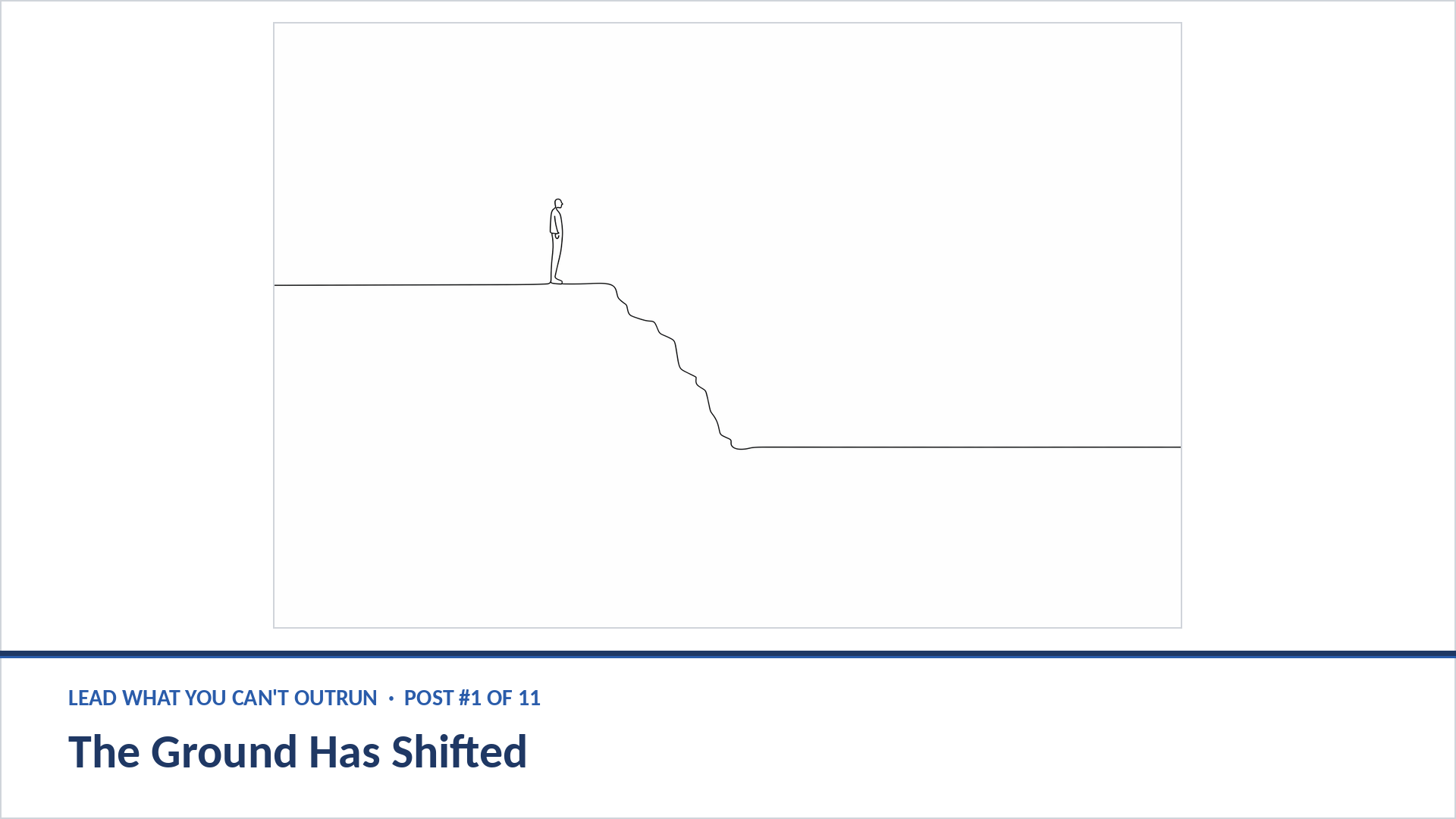
The Ground Has Shifted
An ordinary Tuesday, 275 interruptions and the Capacity Gap. None of them are slacking, and the data proves it.
Read the post →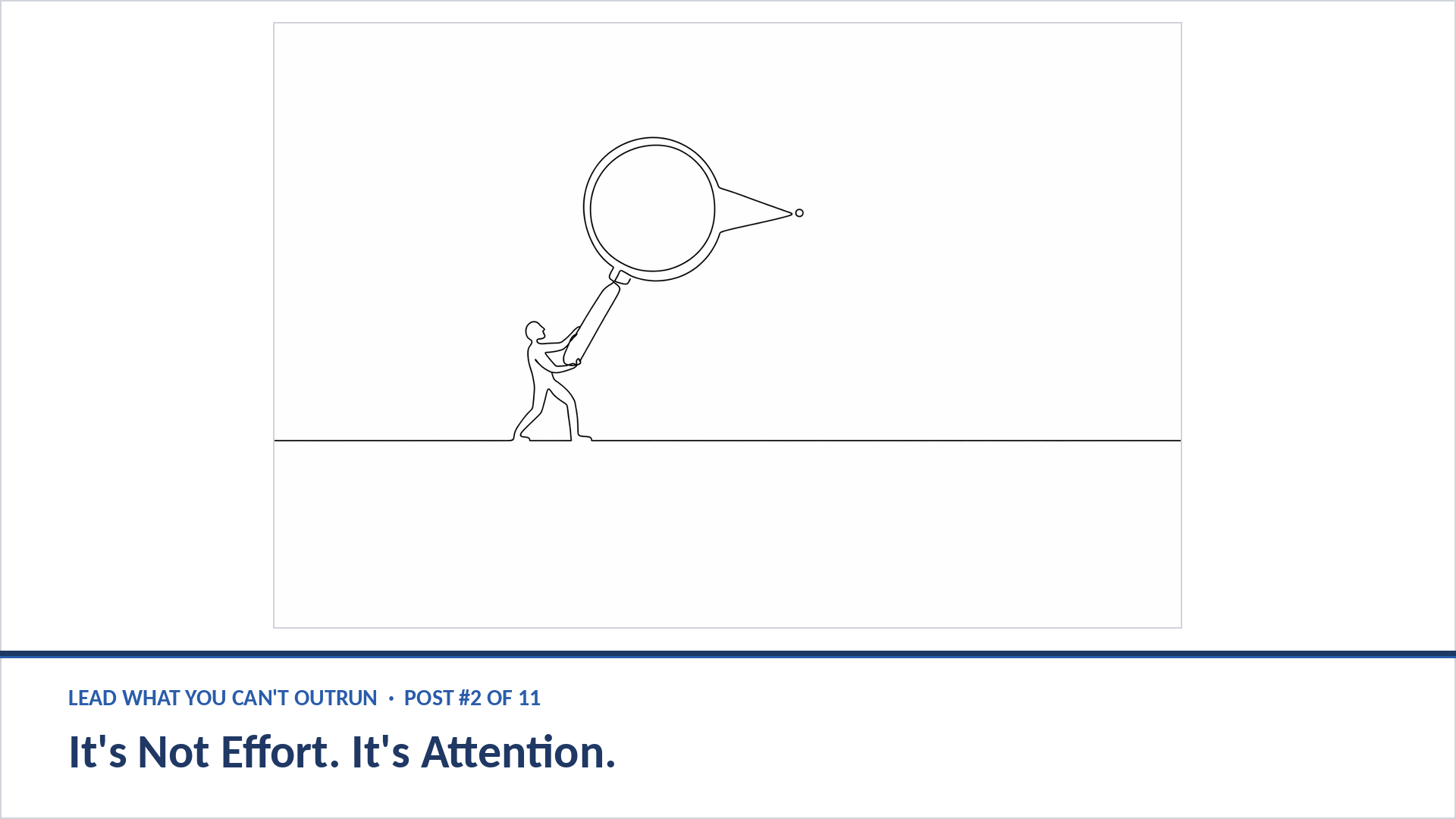
It's Not Effort. It's Attention.
Your team's real constraint isn't how hard they work. It's where their attention goes, and how often you fragment it.
Read the post →
You'll Never Keep Up (and That's Fine)
Curate the noise instead of forwarding it. Finishing beats starting, and closure is what protects focus.
Read the post →
Judgement Just Got Expensive
When output becomes cheap and abundant, the scarce capability is the human who can tell good from merely plausible.
Read the post →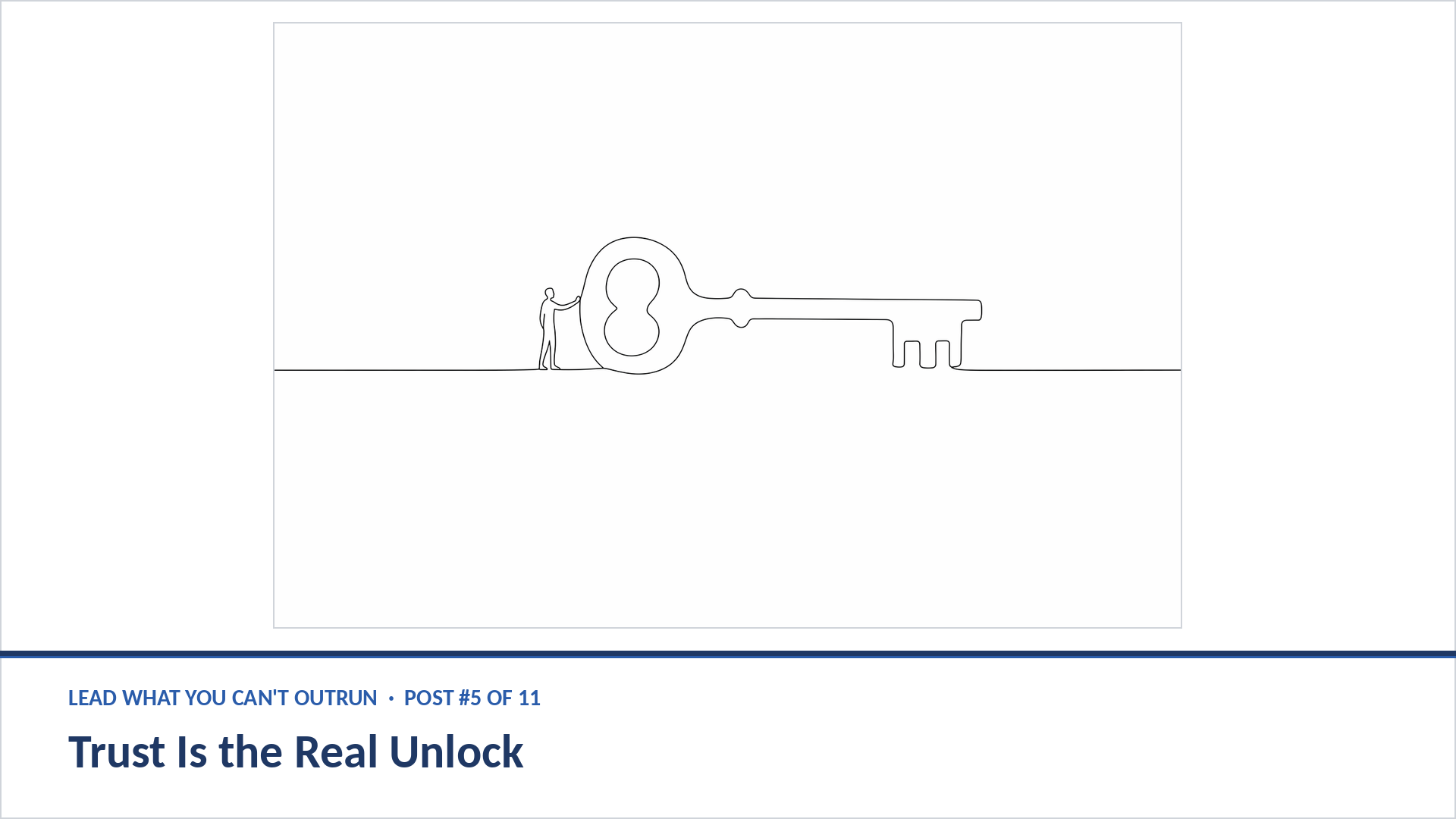
Trust Is the Real Unlock
Adoption dies in the trust gap, not the capability gap. A racing car's brakes don't exist to make it slow. They're what let it commit to the corner.
Read the post →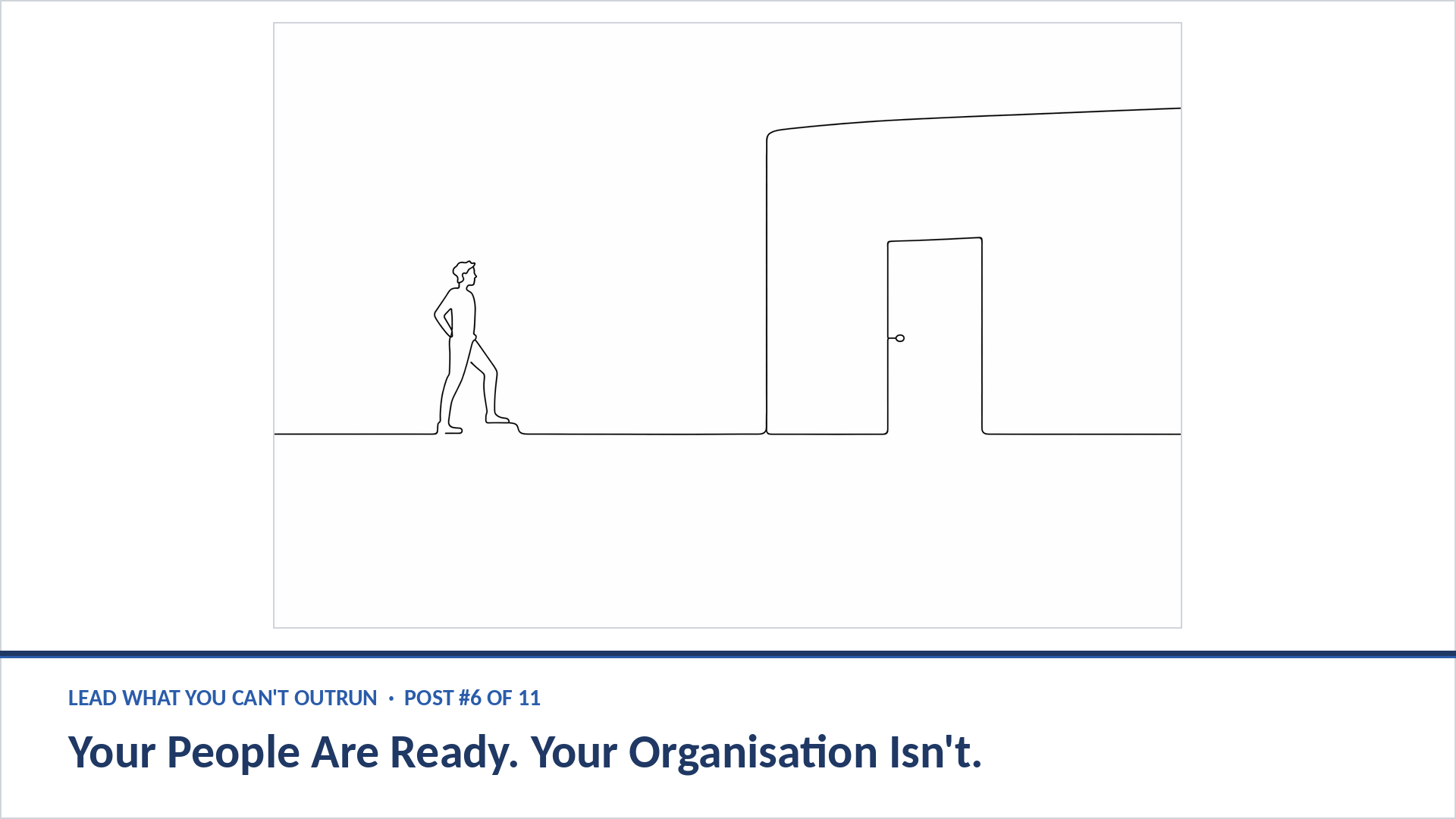
Your People Are Ready. Your Organisation Isn't.
The gap between willing people and unready systems, and who is actually responsible for closing it.
Read the post →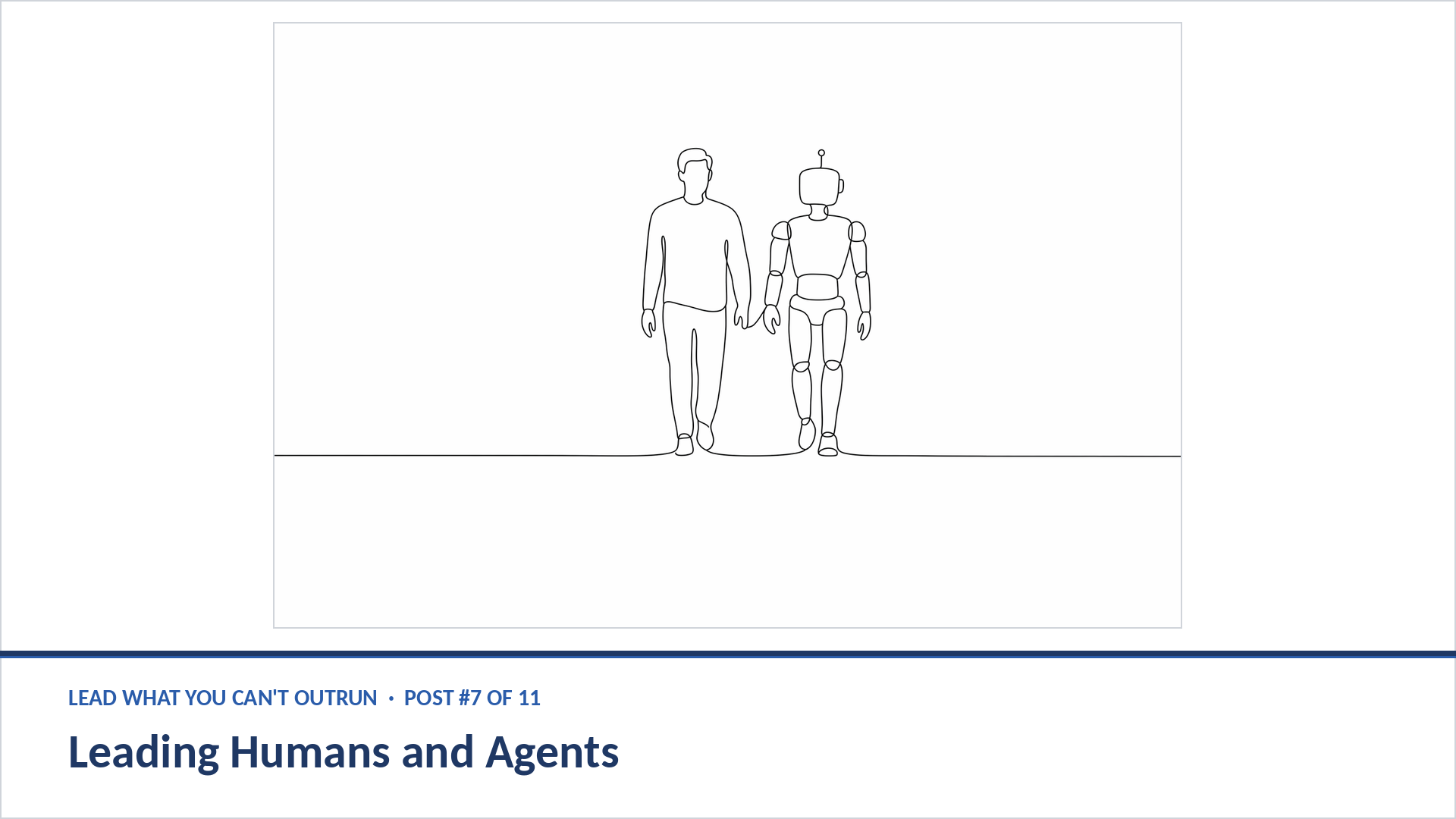
Leading Humans and Agents
What changes when part of your team isn't a person: supervision, accountability and early-warning signals.
Read the post →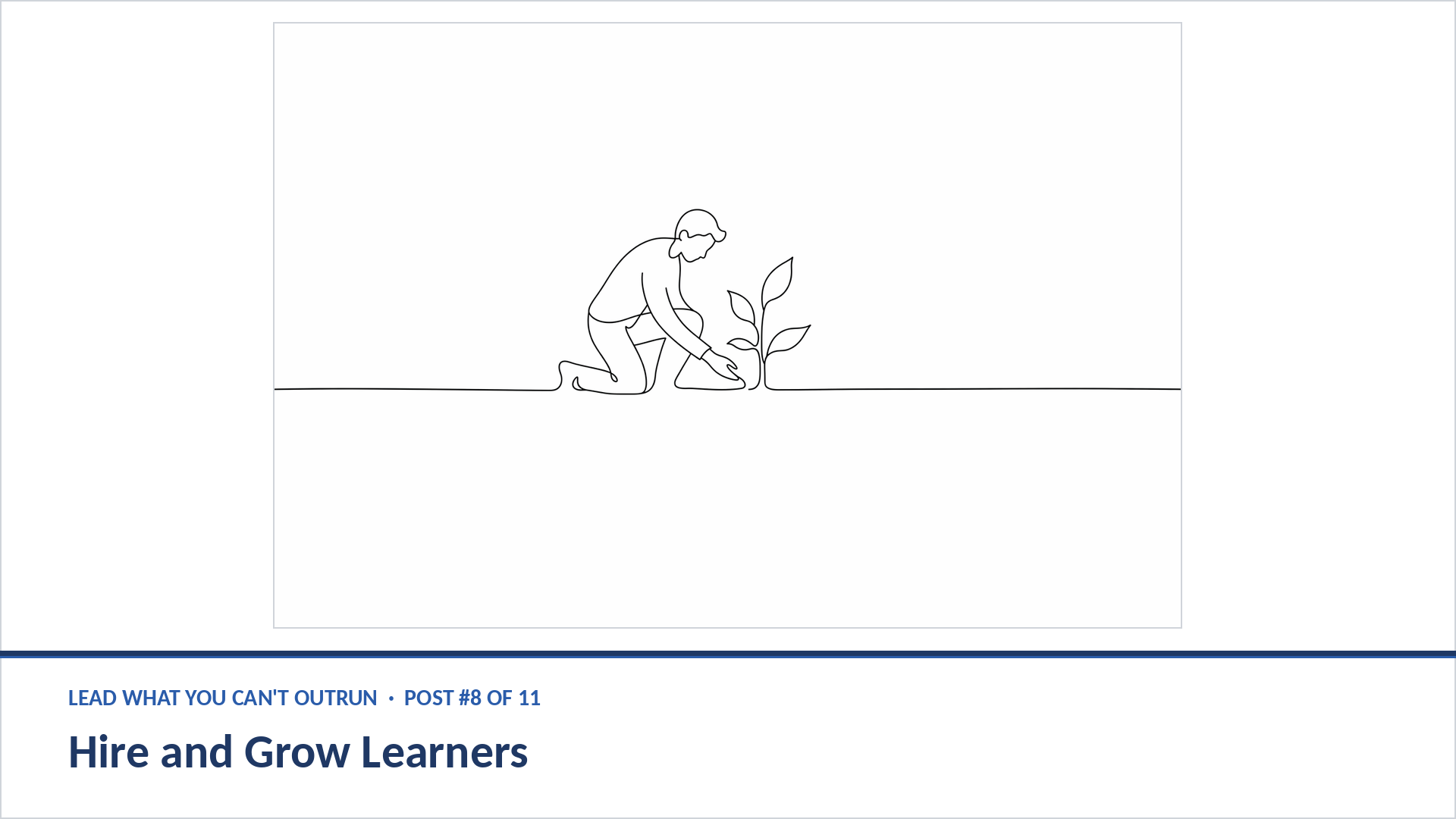
Hire and Grow Learners
When expertise depreciates in quarters, the thing you hire for is the capacity to keep learning.
Read the post →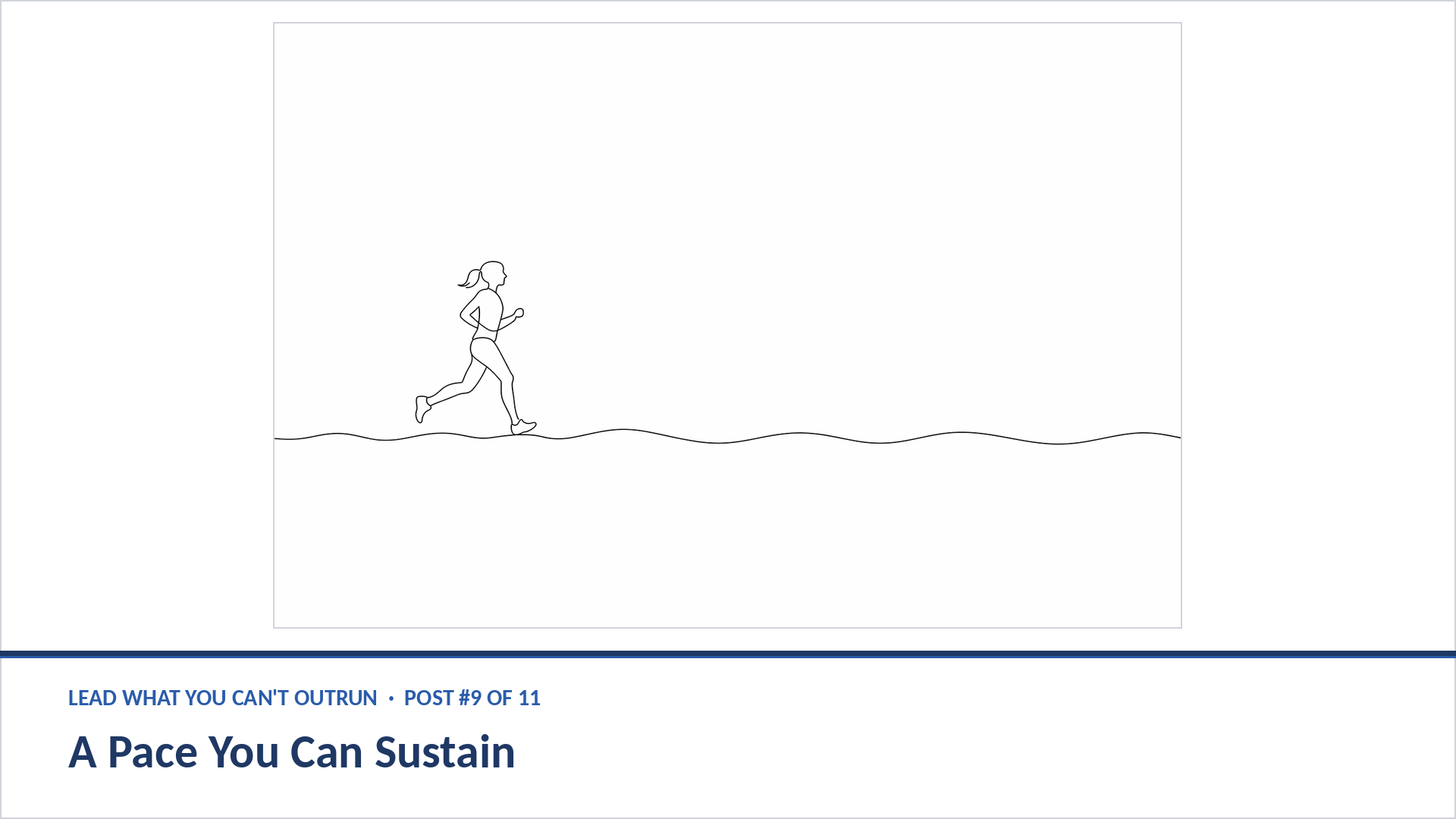
A Pace You Can Sustain
You are the pacesetter, whether you mean to be or not. What your calendar quietly teaches your team.
Read the post →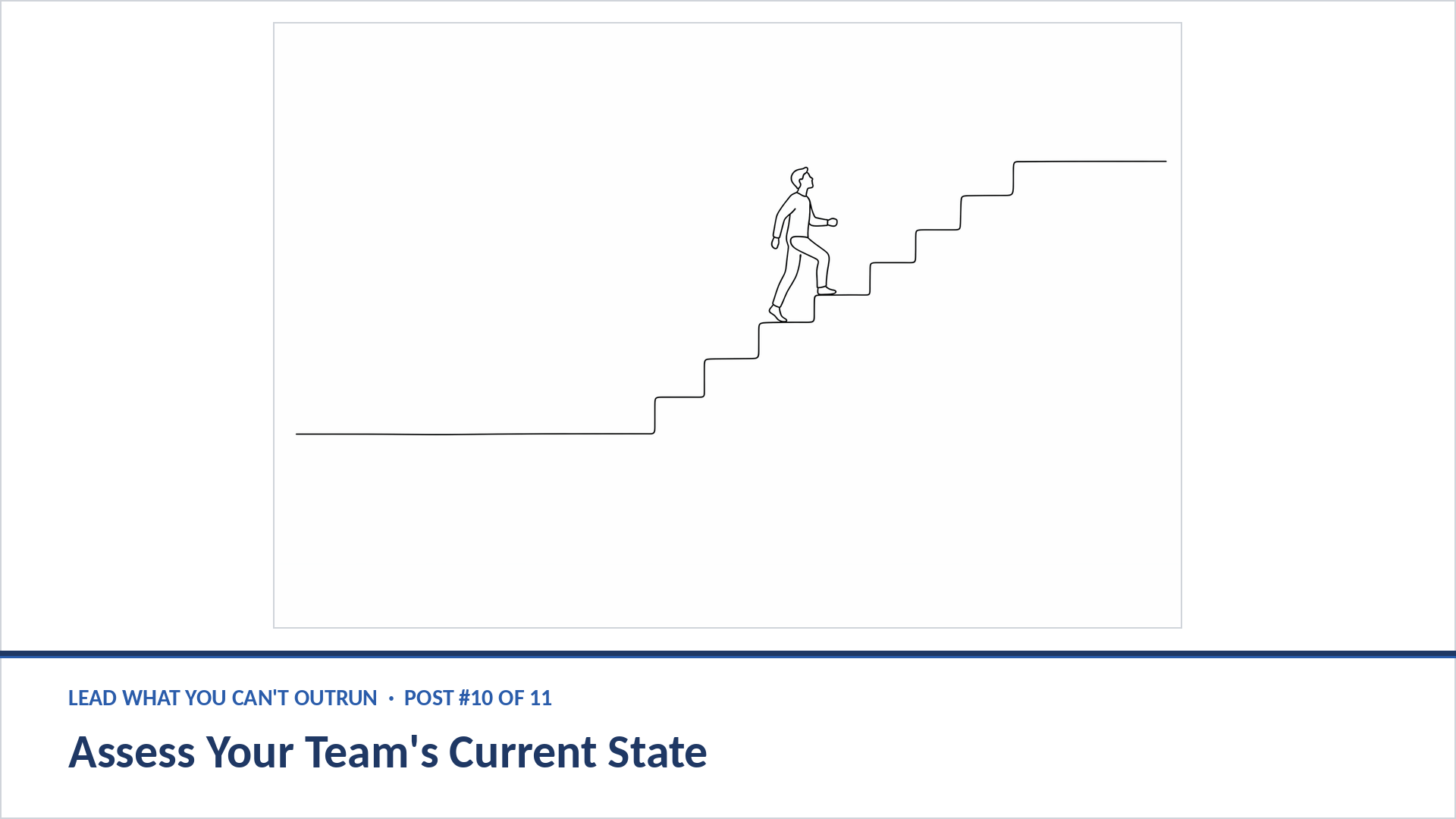
Will Your Team Outlast What It Can’t Outrun?
Locate your team honestly, then take one ordered step at a time. Where the assessment and the 90-day plan come in.
Read the post →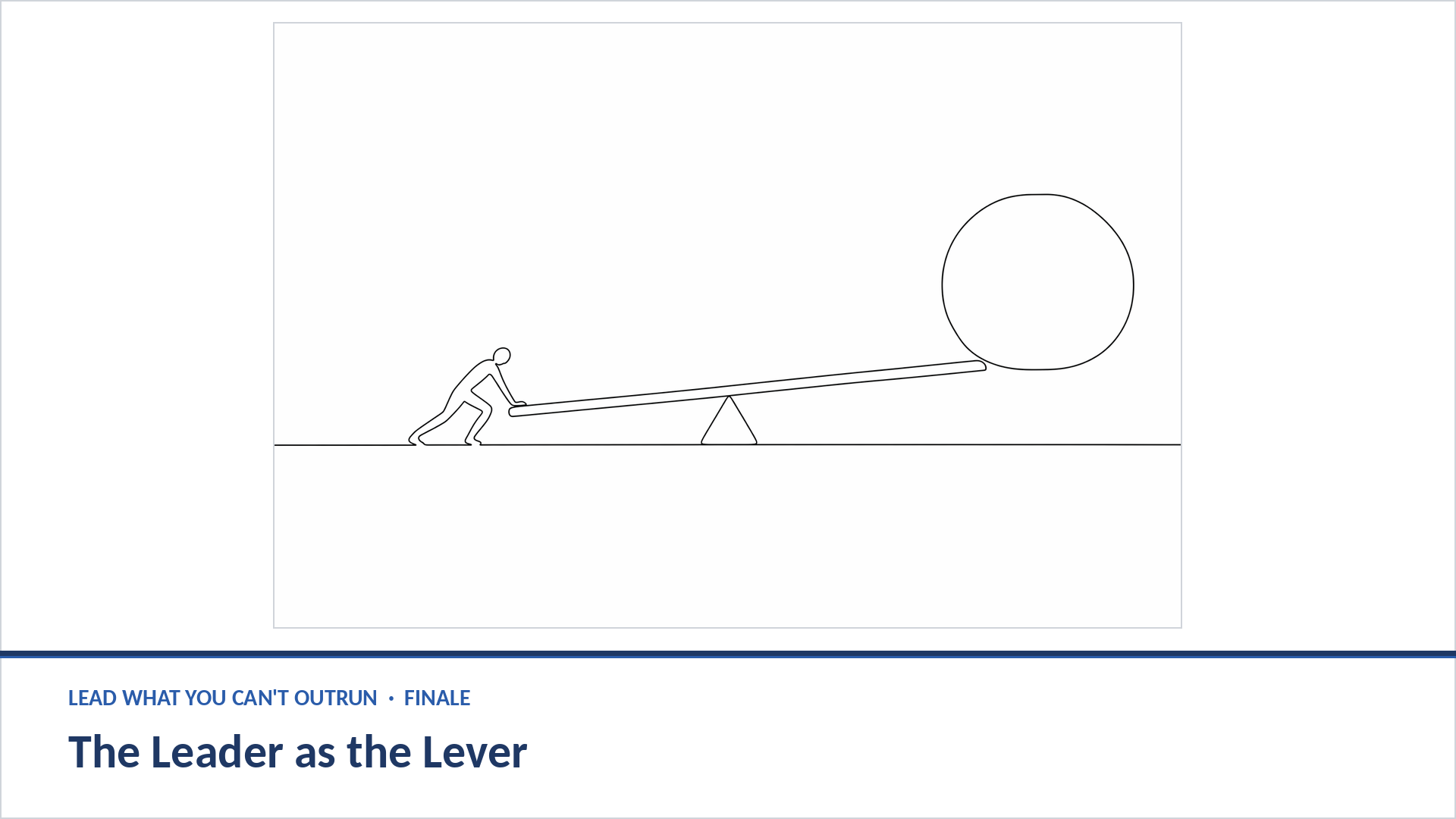
The Leader as the Lever
Where Book One lands, and where Outlast and Build pick the argument up.
Read the post →