Your People Are Ready. Your Organisation Isn't. The Transformation Paradox
The hardest part, getting people willing and able, is largely done. What remains is the part you're positioned to fix.
The person who went back
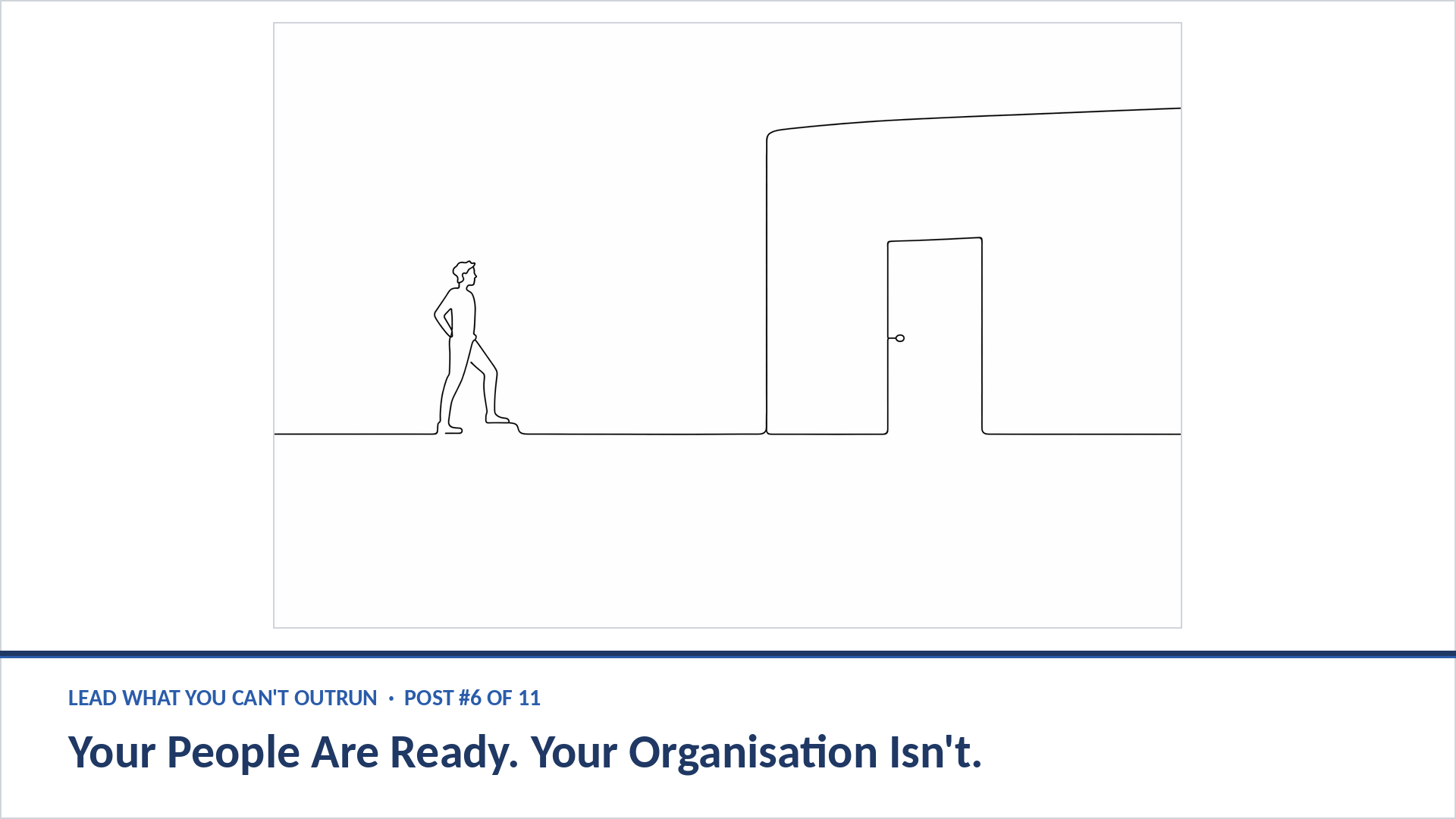
Somewhere on your team is a person who has quietly worked out a better way to do their job with AI and then looked at the system around them, concluded there was no real upside to making a fuss, and gone back to doing things the way the organisation still expects. The capability was there. The permission, and perhaps more importantly the reward, were not. This is the defining management problem of the AI era, and Microsoft's 2026 research names it precisely: the Transformation Paradox. The constraint on most organisations is no longer whether their people can do new things with AI. It's whether the organisation is built to let them, and to make it worth their while.
The paradox, in numbers
The data describes a workforce caught between two opposing pressures. Sixty-five per cent of AI users fear falling behind if they don't adopt AI quickly. And yet 45% say it feels safer to stick to their current goals than to redesign how they work. Most telling of all: only 13% feel genuinely rewarded for reinventing the way they do their job. The same forces pushing people towards AI are simultaneously holding them back, and the organisation is usually the thing applying the brake.
Let's think about the 13% a little more. We're asking people to transform how they work, in the middle of the fastest technology shift of their careers, and almost nine in ten can see no reward for doing so. People aren't irrational. If reinvention carries all the risk and none of the recognition, they'll sensibly keep their heads down and hit the targets they already understand.
Ready people, unready systems
Recall the finding from post 1: organisational factors drive roughly 67% of AI's impact, against just 32% for individual effort. The Transformation Paradox is that statistic lived out. The individual half is increasingly sorted. People are curious, capable and resourceful. It's the organisational half, the systems, incentives and management habits around them, that hasn't caught up. In most companies, the people are ahead of the place they work.
That should reframe where you point your energy. The instinct is to push individuals harder: more training, more encouragement, more pressure to adopt. That risks rewarding use (slop) over impactful use (value). But the individuals are mostly ready. The leverage is in the system you control: what you measure, what you reward, what you make safe. You're not short of willing people. You're short of an organisation built to let them win.
Why your best people leave first
This creates a people risk. The people most frustrated by an unready organisation are precisely your most AI-ready ones, the ambitious, capable people who can see what's now possible and are maddened by a system that won't let them do it. They're also the people with the most options. When the gap between what someone can do and what their organisation lets them do grows too wide, the talented don't stay and complain; they leave and do it somewhere that will let them. An unready organisation doesn't just slow adoption. It quietly exports its best people.
From safe-to-speak to safe-to-reinvent
Psychological safety used to mean making it safe to speak up. The AI era demands an extension: it's no longer enough that people feel safe to raise a concern; they need to feel safe to abandon a method that still works in favour of one that might work better and to fail visibly while they figure it out. That's a higher bar, because reinvention means temporarily being worse at something you were already good at. This is a hard habit to build in a culture where failure is seen as a negative.
The leader's job is to make that risk worth taking, and two moves matter most. First, change what you reward: celebrate the person who redesigned the workflow, not only the person who hit the number, so that the 13% becomes the majority. Second, and the research is unusually direct here, model it yourself. Microsoft found that recognition of AI's value jumps by 17 percentage points when managers actively use AI themselves rather than merely endorsing it. You cannot delegate this signal. A leader who tells the team to reinvent while changing nothing about their own work is heard, correctly, as not meaning it. Walk the talk. I love Cowork and Scout. They've revolutionised how I manage, and I tell everyone I can about them (including you!).
The shift
The Transformation Paradox is good news wearing bad news' clothing. It means the hardest part, getting people willing and able, is largely done. What remains is the part you're actually positioned to fix: aligning the organisation behind them, making reinvention safe and rewarded, and getting out of your own people's way. Close that gap and you release capability that's already sitting in the building, unused.
And one of the most concrete things your newly unleashed people will reinvent is the shape of the team itself, because the next colleague many of them work alongside won't be a person at all. That's post 7.
This post first appeared on LinkedIn, where the conversation carries on in the comments. Join the discussion ↗