The Ground Has Shifted: Why You Can't Out-Run an Exponential
The pace is real, but speed is the wrong response, and the evidence says so.
An ordinary Tuesday
Picture a Tuesday. Not a dramatic one, an ordinary Tuesday for an ordinary manager of a very capable team, the best you’ve ever worked with. It starts before it starts: a glance at Teams over coffee, two messages flagged before the day has begun. By eleven you've been pulled into a problem that wasn't yours yesterday and somehow is today. Lunch is a sandwich at your desk. The afternoon disappears into back-to-back calls, and the work that actually matters gets pushed to "this evening", which means nine o'clock, which means tired.
Your team is having the same Tuesday. And here's the thing worth sitting with: none of them are slacking. They're working flat out. They just feel overloaded and unable to fully finish.
What the numbers say
This isn't a feeling; we have the data. Microsoft's Work Trend Index, which draws on trillions of anonymised productivity signals alongside global surveys, found the average employee is now interrupted every two minutes, somewhere around 275 times a day, by a meeting, an email or a message. Half the working day's most productive hours are consumed by meetings. Work has stretched into a "triple-peak" pattern, bleeding into the early morning and late evening. And the human consequence shows up plainly: nearly half of employees, and more than half of leaders, say their work feels chaotic and fragmented.
Layer on the economic weather. "Do more with less" is no longer a slogan; it's the operating reality. Headcounts have been trimmed. Expectations have not. The Work Trend Index gave this a name, the Capacity Gap: most leaders say productivity has to rise, while most workers say they simply don't have the time or energy to meet what's already asked.
AI didn't wait for us to be ready
Into that already-stretched environment arrived the most significant technology shift in a generation. And the pace of AI isn't a feeling; it's measurable. In Microsoft's ecosystem alone, the use of AI agents grew roughly fifteen-fold in a single year. For the ambitious, capable people we lead, that creates a very particular pressure: the gnawing sense that whatever they mastered last quarter is already depreciating. Most teams aren't arriving at this as experts. They're AI-curious, not yet AI-fluent.
So, we have a stretched workforce, a capacity gap, and an exponential technology landing all at once. Small wonder the instinct is to run faster.
Why this lands on you
Here's the finding that should change how every manager reads this moment. When Microsoft's researchers asked what actually drives the impact of AI inside an organisation, they expected the answer to be individual, talent, mindset, enthusiasm. It wasn't. Organisational factors, culture, manager support, talent practices, accounted for roughly 67% of the reported impact, against just 32% for individual effort. More than twice as much.
Read that again, this is the most important part. In an age obsessed with individual upskilling, the single biggest determinant of whether a team thrives is not how clever or motivated each person is. Your teams are full of clever, motivated people. It's the system around them and you are the architect of that system. The lever is you. One of the most powerful pieces of feedback I ever received helped me realise that what I role model is what I should expect from my team: if I am stressed, urgent and chaotic, so are they. I truly believe the most impactful change any manager can make is in how they role model their own behaviours and personal expectations with their teams.
That's liberating and uncomfortable in equal measure. Liberating, because you have far more influence than the noise suggests. Uncomfortable, because the fragmented, exhausting Tuesday isn't just happening to your team, it's something the way you lead can either deepen or dissolve.
The trap, and the argument
Faced with all this, the natural response is to match the pace of the world with the pace of your own activity. Add the initiative. Run five bets at once. I want to make the opposite case. You can put a super-powerful new engine in a car heading in the wrong direction, it will still head the wrong way, only faster. Microsoft's own researchers make the same point: bolt AI onto a broken way of working and you just make it broken faster.
The leaders who pull ahead subtract. They protect attention instead of fragmenting it. They help their teams finish instead of starting more. They curate the noise instead of forwarding it. They make it safe to change. And they treat focus, not effort, not access to the latest tool, as the scarce resource it has become.
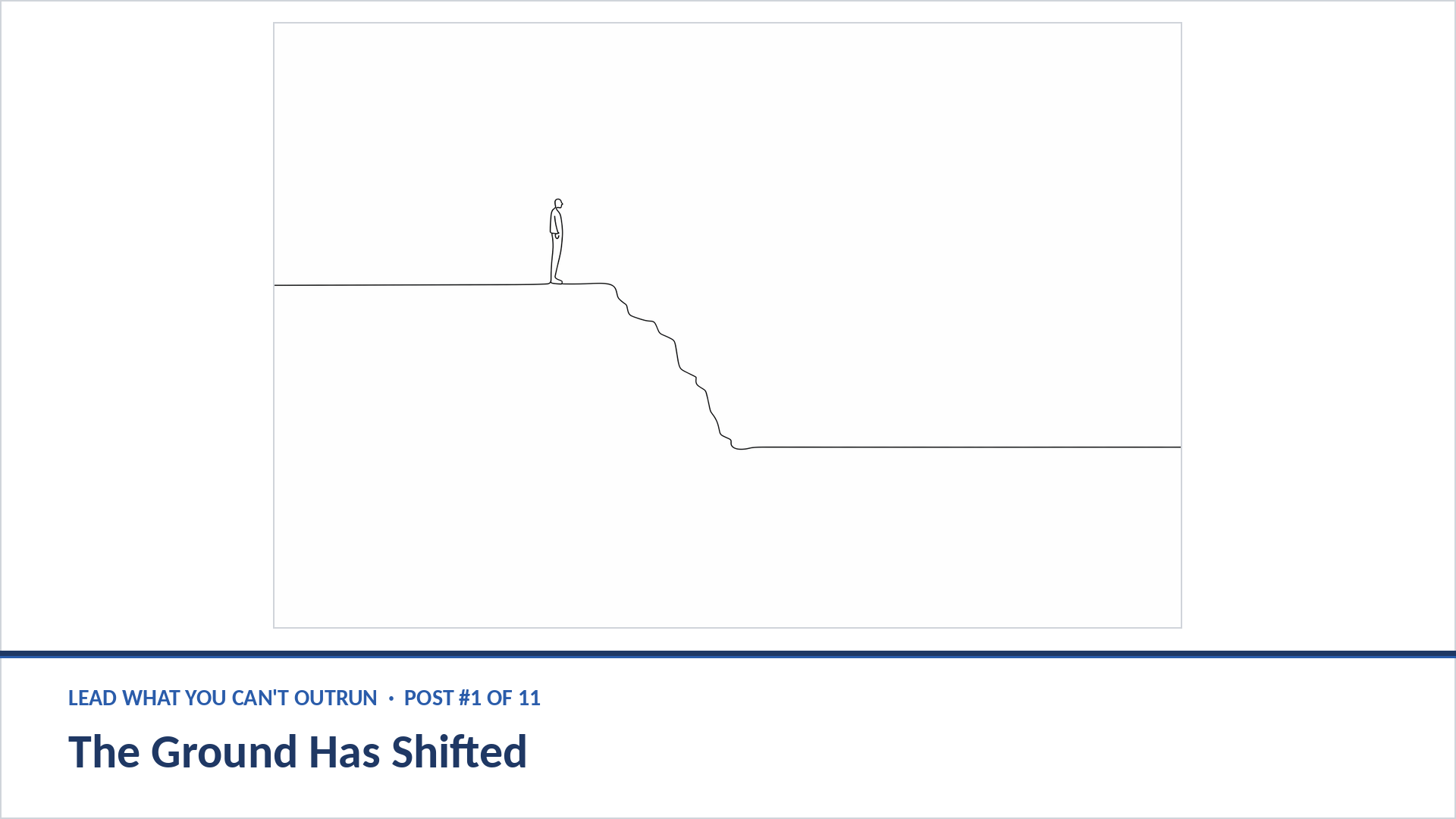
This is not about AI. It's about leadership in the world AI has made, fast, demanding, lean and unrelenting. The ground has shifted. The good news is that the response isn't to run harder. It's to lead more deliberately.
And it begins with attention, which is where post 2 goes next week!
Feel free to leave your comments, thoughts or feedback, does this resonate, do you see and feel the same?
This post first appeared on LinkedIn, where the conversation carries on in the comments. Join the discussion ↗