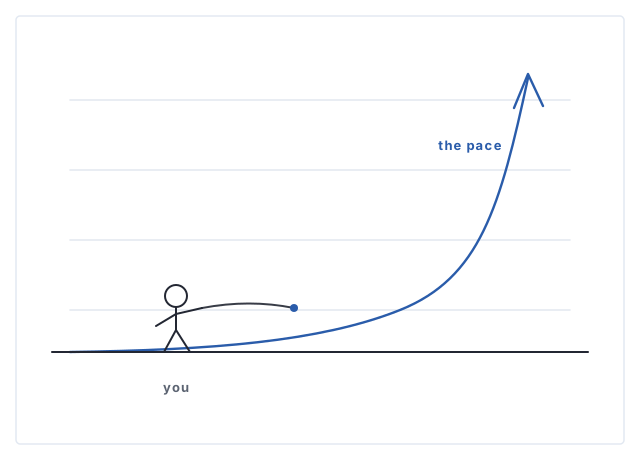
You can't out-run
an exponential.
So stop trying to keep up. Start leading what matters.
Relentless pace, constant interruption, “do more with less”, and now AI arriving faster than anyone can absorb. Most advice tells leaders to move faster and adopt more. This series makes the opposite case: the winning response is subtraction.
Book One is yours at no charge. PDF and EPUB, straight download.
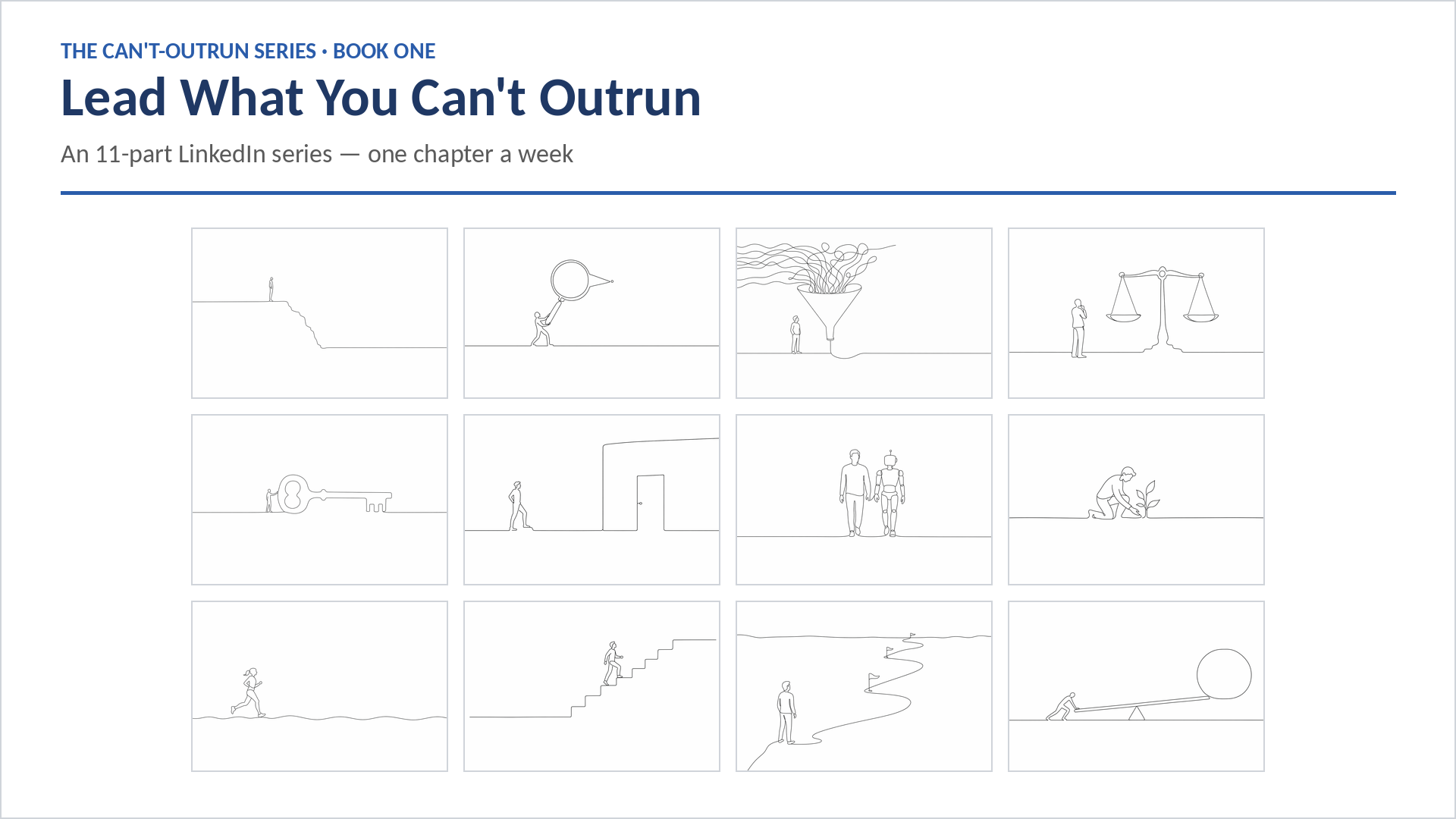
Every chapter also ran as a post. Read the series
None of them are slacking. They're working flat out.
And they still can't finish. That isn't a motivation problem, it's a measurable one.
You can put a new, super-powerful engine in a car travelling in the wrong direction, but it will still head in the wrong direction, only faster. Chapter 1 · The Ground Has Shifted
The leaders who pull ahead do the counter-intuitive thing. They subtract.
One idea runs through all three books: you cannot out-run an exponential, so stop trying. Each book takes that idea somewhere different, to the team, to yourself, and to what you leave behind.
Lead
Outward, at the team
How to lead a team through relentless change. The move: lead deliberately.
- Attention, not effort, is the scarce resource
- Finishing beats starting; closure protects focus
- When output gets cheap, judgement gets expensive
- Trust, not technology, is what unlocks adoption
- Leading humans and agents without burning people out
Outlast
Inward, at the self
How to sustain yourself in it. The move: recover sustainably.
- Recovery is not the reward you earn afterwards
- Engagement and compulsion look identical from outside
- Four reasons we keep going and what each one costs
- You are the pacesetter, whether you mean to be or not
- Rebuilding an honest relationship with the work
Build
Forward, at what lasts
What to build that the churn can't erode. The move: build to last.
- Separate the fast from the slow, and invest in the slow
- Back the assets that don't depreciate
- Compounding beats intensity, every time
- A team that outlasts you; a culture that holds
- Build it antifragile, leave it better than you found it
You cannot out-run an exponential. So lead deliberately, recover sustainably, and build to last. The series throughline
Three books. One operating system.
Lead the team. Sustain yourself. Build what lasts. Each stands alone; together they're a way of working in an age that refuses to slow down.
 Book One · Available now
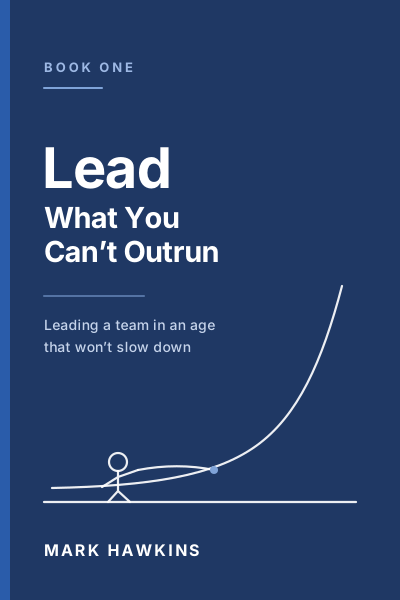
Lead What You Can't Outrun
Managing Teams in an AI World
Leading a capable team through relentless pace and the arrival of AI. 11 chapters, a readiness assessment and a 90-day plan.
 Book Two · Coming
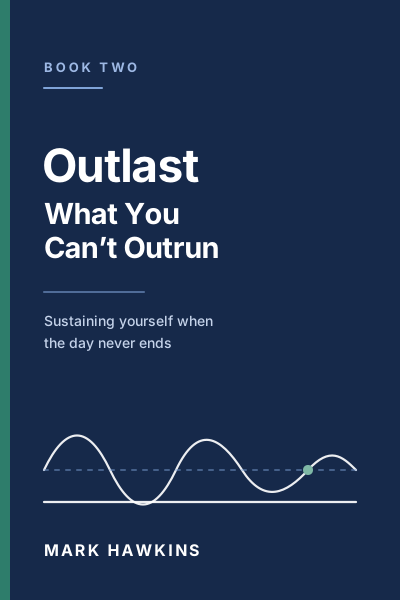
Outlast What You Can't Outrun
The day that never ends, why recovery isn't the reward, and how to rebuild an honest relationship with work.
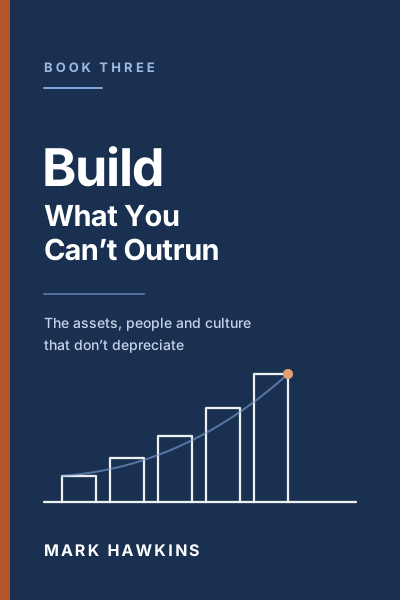 Book Three · Coming
Build What You Can't Outrun
The fast and the slow. The assets that don't depreciate, the team that outlasts you, the culture that holds.
Where does your team stand and what do you do about it?
Book One doesn't stop at the conclusion. It ends with two tools as well, and both are online and open to anyone.
- The Team Readiness Assessment (Appendix A). Sixteen statements across eight dimensions. Gives you a readiness stage and your single barrier point. About ten minutes.
- The Leader's Toolkit & 90-Day Planner (Appendix B). The six tools from the book, sequenced into a 90-day plan you can export.
Scope: these cover Lead What You Can't Outrun, Book One only. Run either on its own, or both together and the planner picks up your barrier point automatically. Books Two and Three carry their own tools: the Relationship-With-Work Self-Assessment and the Durability Audit.
Both run entirely in your browser, and nothing you type is sent anywhere.
Download Lead What You Can't Outrun.
The full Book One: 11 chapters, the Team Readiness Assessment and the 90-day operating system. There is no charge, and nothing to buy.
- Instant download, PDF and EPUB, on the next page
- The Team Readiness Assessment and Leader's Toolkit, in the book and online
- If you'd like, a note when Books Two and Three land
The books are one half of this. The comments are the other.
I worked through the ideas in Book One publicly, a chapter at a time, over on LinkedIn. Not as marketing, as a way of testing the argument against people who are actually living it. All twelve posts are here, and Outlast is next.
Some of the best material in these books started life as a comment from a manager who'd read a post and said “that's not quite how it works where I am.” If that's you, I'd genuinely like to hear it. What lands, what doesn't, and what you'd add.
- Connect or follow. That's where every post appears first
- Leave a comment. It's read, replied to, and often ends up shaping Books Two and Three
- Disagree openly. The argument gets better when it's tested